
Diplomasi Ekonomi Indonesia di Era Pasca Pandemi: Manufaktur sebagai Mesin Pemulihan
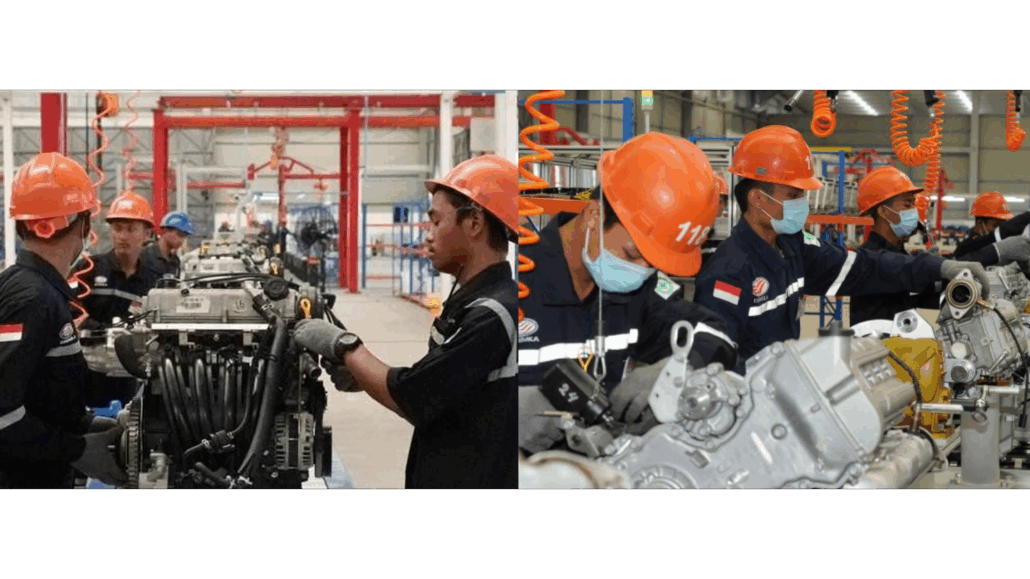
Di tengah arus globalisasi dan hantaman pandemi COVID-19, diplomasi ekonomi Indonesia bergerak dari jargon ke hasil nyata. Dalam tradisi hubungan internasional, kepentingan ekonomi memang sejak lama menjadi pendorong hubungan diplomatik (Berridge & James, 2003). RPJMN 2020–2024 secara tegas menempatkan diplomasi ekonomi—khususnya ekspor dan investasi—sebagai tuas pertumbuhan (Kementerian PPN/Bappenas, 2020). Fokus ini kian relevan ketika perang dagang AS–Tiongkok mengguncang rantai pasok dan mendorong negara-negara ASEAN—termasuk Indonesia—berlomba memperkuat daya saing kawasan (Sayekti, 2019). Berbeda dari era sebelumnya yang lebih menonjolkan diplomasi politik-keamanan, Presiden Joko Widodo mendorong orientasi yang lebih pragmatis: perdagangan internasional dan investasi asing sebagai mesin kesejahteraan. Dorongannya lahir dari sederet faktor: defisit neraca perdagangan dan rapuhnya rupiah (BPPK Kemlu, 2015); dominasi ekspor berbasis bahan mentah dan belum optimalnya posisi Indonesia dalam global value chains (Nurdiati et al., 2018); melambatnya pertumbuhan di pasar tradisional Barat dan Asia Timur (Prasetyo & Susandika, 2021); efektivitas kerja sama kawasan yang belum maksimal; hingga kebutuhan hilirisasi untuk mencipta nilai tambah di dalam negeri (CNN Indonesia, 2019). Pada saat yang sama, Masyarakat Ekonomi ASEAN menjadikan Asia Tenggara pasar tunggal yang menuntut perbaikan regulasi investasi dan perdagangan lintas batas. Realitasnya, kontribusi lapangan kerja manufaktur di negara berkembang masih kecil jika dibandingkan negara maju (Arfani & Hapsari, 2021). Di sinilah diplomasi ekonomi menjadi instrumen kebijakan luar negeri yang bukan hanya mengejar surplus, tetapi juga menata struktur produksi dan memperkuat ekosistem industri domestik (Okano-Heijmans, 2011). Kebijakan luar negeri periode kedua Jokowi menempatkan penguatan peran Indonesia di ASEAN dan diplomasi ekonomi sebagai prioritas—sejalan dengan agenda penyelesaian perbatasan, perlindungan WNI, dan perluasan jejaring global (Haryono, 2019). Pada periode pertama, Indonesia mendorong penghapusan hambatan non-tarif dan pembukaan pasar baru: Eropa Timur-Tengah, Afrika, Amerika, Karibia, hingga Asia yang bertumbuh cepat (Kemlu RI, 2015). Orientasi ini kian penting di era pasca pandemi, ketika ketahanan perdagangan dan investasi harus dijaga sekaligus dipulihkan. Dari sisi kinerja, manufaktur terbukti menjadi tulang punggung ekspor. Periode Januari–April 2023, manufaktur menyumbang 70,21 % dari total ekspor nasional, dengan ekspor senilai US $60,63 miliar dari total US $86,35 miliar (Junida, 2023). Selama tahun 2023, ekspor sektor industri pengolahan (manufaktur) mencapai US $186,98 miliar, menyumbang 72,24 % dari total ekspor nasional sebesar US $258,82 miliar (Mahadi, 2024). Dari sisi investasi di sektor manufaktur, sepanjang tahun 2022, realisasi investasi sektor manufaktur mencapai Rp497,7 triliun, naik 52 % dibandingkan tahun sebelumnya (Islamiati, 2023). Periode Januari–September 2022, sektor manufaktur menyumbang 40,9 % dari total investasi nasional, mencapai Rp365,2 triliun (Gani, 2022). Pasca COVID-19, sektor manufaktur tetap menjadi andalan ekspor Indonesia, walaupun kontribusinya turun sedikit dari kisaran 75–80 % menjadi sekitar 70–72 %, tetapi tetap mendominasi. Di sisi investasi, manufaktur mencatat pertumbuhan signifikan pada 2022, memperkuat keyakinan bahwa industrialisasi dan hilirisasi adalah strategi utama keluar dari krisis—selaras dengan semangat “tidak menjual komoditas mentah saja”. Bagaimana strategi diplomasi ekonominya? Pertama, economic salesmanship: para diplomat dan duta besar diposisikan sebagai “tenaga penjual” negara untuk mempromosikan perdagangan dan investasi, bersinergi lintas kementerian dan bank sentral (Sabaruddin, 2016). Pandemi memang membatasi pameran fisik, tetapi membuka ruang bagi kurasi virtual dan temu bisnis daring—membuktikan promosi bisa lincah tanpa kehilangan skala (Kemendag, 2020). Kedua, networking: ekspansi BUMN ke Afrika; penyelenggaraan Trade Expo Indonesia; dan jejaring dengan filantropi teknologi—misalnya kemitraan dengan Alibaba/Jack Ma—yang menunjukkan diplomasi ekonomi juga menyasar kolaborasi penanganan krisis (Kemlu RI, 2020). Ketiga, image building/promotion: membangun citra keandalan produk dan ekosistem usaha Indonesia melalui kunjungan kenegaraan, forum G20, dan business matching virtual. Ini bukan sekadar kampanye reputasi; citra positif memperpendek trust gap investor dan pembeli (Kemendag, 2020). Keempat, regulation management: pembentukan koalisi domestik negara–swasta untuk menetapkan standar dan menyelesaikan perjanjian perdagangan prioritas—dari IEU-CEPA hingga PTA/CEPA di berbagai kawasan—sekaligus menerbitkan protokol dagang era normal baru (Basith, 2020; Kemendag, 2020). Empat poros ini saling menguatkan: promosi menarik minat, jejaring membuka pintu, citra menumbuhkan kepercayaan, regulasi memastikan kepastian hukum. Dalam kerangka negara berkembang, tipe diplomasi ekonomi yang efektif memang bertumpu pada kemitraan publik–swasta yang luas (Rana, 2007). Indonesia mempraktikkan pola ini: negara menyiapkan perjanjian, regulasi, dan promosi; pelaku usaha mengeksekusi ekspor-investasi dan memperkuat rantai pasok. Ketika hambatan non-tarif ditekan, pasar non-tradisional dibuka, dan hilirisasi dipacu, manufaktur memperoleh ruang bernapas untuk naik kelas—dari sekadar perakit menjadi produsen bernilai tambah. Tentu masih ada pekerjaan rumah: memperlebar basis produk, memperdalam teknologi, dan meningkatkan penyerapan tenaga kerja berkualitas—agar lonjakan ekspor dan investasi terkonversi menjadi kesejahteraan yang merata. Namun arah kebijakan sudah tepat: diplomasi ekonomi bukan pelengkap, melainkan instrumen inti pemulihan dan transformasi. Dengan kombinasi salesmanship yang agresif, jejaring yang relevan, promosi yang kredibel, dan manajemen regulasi yang adaptif, Indonesia menegaskan peran sebagai produsen bernilai—bahkan di tengah guncangan pandemi (Nabilla, 2021; Haryono, 2019). Intinya, pandemi mempercepat pembuktian bahwa diplomasi ekonomi bekerja ketika strategi industri dirangkai dengan perjanjian dagang, promosi cerdas, dan eksekusi hilirisasi. Jika konsisten, Indonesia tak hanya pulih—tetapi melaju sebagai basis manufaktur utama ASEAN, dengan diplomasi ekonomi sebagai mesin penggerak (Kemendag, 2020; Kemenperin, 2021; Santia, 2021). Referensi Arfani, R. N., & Hapsari, M. (2021, 22 Desember). Diplomasi komoditas Indonesia pascapandemi. Media Indonesia. https://mediaindonesia.com/opini/459557/diplomasi-komoditas-indonesia-pascapandemi Media Indonesia Basith, M. K. (2020, 18 November). Ini lima prioritas perjanjian dagang yang dikejar Indonesia tahun 2020. Kontan.co.id. https://nasional.kontan.co.id/news/ini-lima-prioritas-perjanjian-dagang-yang-dikejar-indonesia-tahun-2020kontan.co.id Berridge, G. R., & James, A. (2003). A dictionary of diplomacy (2nd ed.). Palgrave Macmillan. kamudiplomasisi.org CNN Indonesia. (2019, 20 November). Jokowi yakin hilirisasi atasi defisit transaksi berjalan. CNN Indonesia. https://www.cnnindonesia.com/ekonomi/20191120191505-532-450112/jokowi-yakin-hilirisasi-atasi-defisit-transaksi-berjalan CNN Indonesia Gani, M. (2022, Oktober 24). Investasi Sektor Manufaktur Naik 54% Tahun 2022.Kemenperin. https://ikmbspjisby.kemenperin.go.id/index.php/web/newsDetail/492 Haryono, E. (2019). Economic diplomacy as Indonesian foreign policy orientation in 2015–2018: Challenges and opportunities. Global Strategis, 13(2), 49–62. https://e-journal.unair.ac.id/JGS/article/view/12067 Universitas Airlangga Journal Islamiati, R. (2023, Januari 25). Investasi Sektor Manufaktur Tembus Rp497,7 Triliun, Ini Klaim Kemenperin. https://ekonomi.bisnis.com/read/20230126/257/1621868/investasi-sektor-manufaktur-tembus-rp4977-triliun-ini-klaim-kemenperin. Junida, A. (2023, Mei 15). Kemenperin yakin ekspor manufaktur Indonesia kembali meningkat. Antara News. Kementerian Luar Negeri Republik Indonesia. (2015). Pedoman umum upaya peningkatan kualitas pelaksanaan diplomasi ekonomi. https://kemlu.go.id/files/repositori/56594/03_Pedoman_Umum_Upaya_Peningkatan_Kualitas_Pelaksanaan_diplomasi_Ekonomi.pdf kemlu.go.id Kementerian Perencanaan Pembangunan Mahadi, A. (2024, Januari 17). Kemenperin: Ekspor industri manufaktur tembus US$187 miliar selama tahun 2023.Kontan. https://industri.kontan.co.id/news/kemenperin-ekspor-industri-manufaktur-tembus-us-187-miliar-selama-tahun-2023 Nasional/Bappenas. (2020). Rencana Pembangunan Jangka Menengah Nasional (RPJMN) 2020–2024: Buku I—Agenda Pembangunan Nasional. https://www.bappenas.go.id/id/publikasi/rpjmn-2020-2024 perpustakaan.bappenas.go.id Kementerian Perindustrian Republik Indonesia. (2021, 12 September). Unggul di ASEAN, kinerja industri Indonesia terus menguat. https://kemenperin.go.id/artikel/22780/Unggul-di-ASEAN,-Kinerja-Industri-Indonesia-Terus-Menguathubunganinternasional.id Nabilla, N. (2021). Strategi diplomasi ekonomi Indonesia dalam menghadapi pandemi
Revisiting ASEAN as Security Community: The Case of Thailand-Cambodia Longstanding Dispute
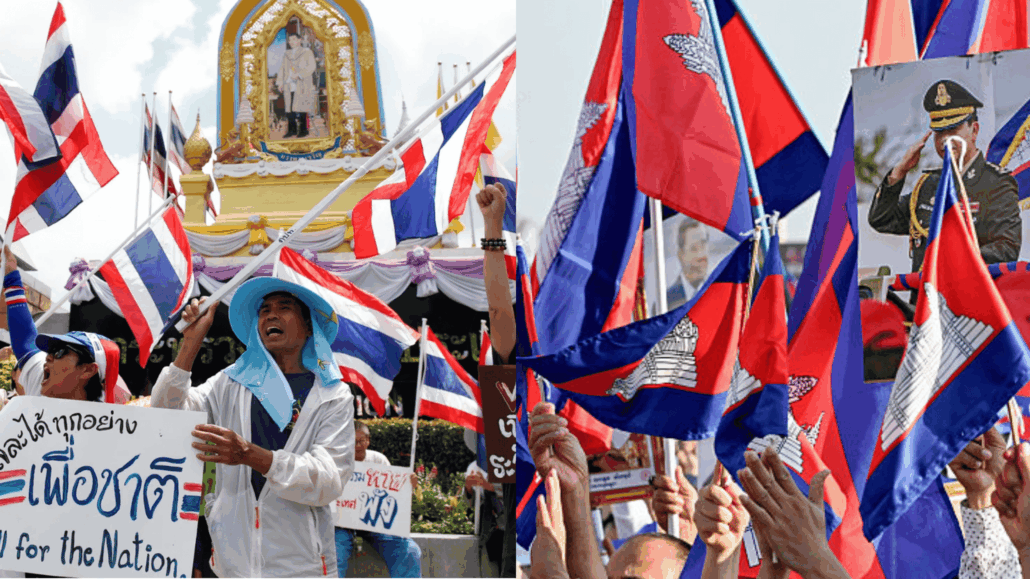
Understanding ASEAN as Security Community Echoing a phoenix emerging from the ashes, ASEAN was founded in 1967 in the midst of turmoil, conflict, and confrontation that continued to shake the Southeast Asian region. For centuries, the region had experienced colonial rule—beginning in the 16th century—and was later subjected to persistent instability fuelled by ideological rivalries during the Cold War between the United States and the Soviet Union. Internal unrest, such as recurring rebellions in Indonesia to ethnic tensions in Myanmar, as well as unresolved border disputes further contributed to the fragile security environment in Southeast Asia. The emergence of a regional organization fostered renewed aspirations for stability, peace, and enduring cooperation among its member states. These hopes were further solidified in 1976, when ASEAN’s founding countries—Indonesia, the Philippines, Malaysia, Thailand, and Singapore—formally committed to shared principles by signing the Treaty of Amity and Cooperation. The treaty articulated core values such as non-interference, mutual respect, and the peaceful settlement of disputes, which have since shaped the normative framework of ASEAN cooperation (Yamakage, 2017). The treaty has since undergone three amendments, in line with the gradual expansion of ASEAN membership to include Brunei, Vietnam, Myanmar, and Laos, with Cambodia joining as the last member state in 1999. ASEAN’s success in bringing together ten countries under a regional framework has led to its recognition as a security community. A security community is defined as a condition in which states and societies within a given region become increasingly integrated under shared institutions, while developing a collective identity that prioritizes peaceful mechanisms for resolving conflicts—particularly those that arise between member states (Acharya, 2009; Deutsch et al., 1957). At first glance, ASEAN appears to fulfil the characteristics of a security community, especially with the formal establishment of the ASEAN Political-Security Community (APSC) in 2015. The creation of the APSC marked a significant institutional step in ASEAN’s efforts to consolidate regional peace and security. It reaffirmed the organization’s commitment to a rule-based order and its vision of fostering ‘a cohesive, peaceful, stable, and resilient region with shared responsibility for comprehensive security’ (ASEAN Secretariat, 2009; Khoirunnisa, 2023). Acharya further observed that the principle of peaceful dispute settlement has been effectively implemented, as evidenced by the absence of armed conflict among its founding members since the inception of ASEAN and its active role in supporting peace efforts during the Cambodia–Vietnam conflict in 1991 (Acharya, 2009; Pou et al., 2021) Despite ASEAN’s normative commitment to peaceful dispute resolution, the resurgence of the Thailand–Cambodia border conflict on 24 July 2025 posed a significant test for the organization. The armed confrontation, which claimed the lives of more than 30 individuals—including both civilians and military personnel—has sparked concerns over the actual capacity of the ASEAN Political-Security Community (APSC) to implement preventive diplomacy effectively and to manage or de-escalate both intra- and inter-regional conflicts (Al Jazeera, 2025). A Brief Overview of Thailand-Cambodia Dispute The border conflict between Bangkok and Phnom Penh over the Preah Vihear Temple area has deep historical roots, dating back to the post-French colonial era in the Indochina region. The competing claims over the temple were brought before the International Court of Justice (ICJ), which ruled that the temple itself belonged to Cambodia. However, this decision ultimately created a ticking time bomb, as it failed to resolve the full scope of the territorial dispute. Although the Thai government formally accepted the ruling regarding Cambodian ownership of the temple, the surrounding 4.6 km2 area were left unaddressed, leaving room for future tensions to escalate (Wagener, 2011). The people living near the temple has repeatedly experienced episodes of armed confrontation between Thai and Cambodian forces, most notably in 2008 and 2011—events that once again prompted the involvement of both the ICJ and ASEAN. The most recent clash, which occurred in late July 2025, was characterized by the Cambodian government as an act of aggression by Thailand, signalling a renewed escalation in the longstanding territorial dispute (Planasari, 2025). To summarize, the conflict has persisted for decades without a lasting resolution. Its recurrence has been driven not only by unresolved territorial issues but also by entrenched mistrust and negative perceptions between the governments and peoples of both countries. The 2008 and 2011 dispute, in particular, were exacerbated by the involvement of ultra-nationalist groups and anti-Thaksin demonstrators in Thailand, whose political agendas exacerbated bilateral hostility—particularly given that former Thai Prime Minister, Thaksin Shinawatra, maintained notably close relations with his Cambodian counterpart during his reign (Pongsudhirak, 2018). Negative sentiment toward Cambodia also grew within Thai society, rooted in the historical memory of Siam’s defeat by French-backed Cambodia—a loss that has often been perceived as a national humiliation (Jenne, 2017). These circumstances have further deepened scepticism regarding ASEAN’s ability to function as a credible mediator capable of producing durable solutions—let alone cultivating a meaningful ‘sense of community’ among its populations to mitigate intra-regional tensions. ASEAN in Action? Evaluating Regional Response to Thailand-Cambodia Crisis ASEAN has consistently sought to contribute to preventing the escalation of conflict whenever tensions flared between Thailand and Cambodia. In 2011, for instance, Indonesia, as the ASEAN Chair at the time, encouraged both parties to agree to a ceasefire through shuttle diplomacy. In this approach, Jakarta, led by former Indonesian Minister of Foreign Affairs Marty Natalegawa, held separate negotiations with each of the conflicting parties (Fadhilah, 2022). Although a ceasefire agreement was successfully reached, the high level of mistrust between Thailand and Cambodia became a major obstacle to achieving a swift or even permanent ceasefire, as mandated by the United Nations Security Council (UNSC) (Wagener, 2011). Amid the clash that took place in 2025, Malaysia, acting as the current ASEAN Chair, responded promptly to the crisis by offering to mediate between the two parties. Nevertheless, reports indicated that the willingness of both sides to enter negotiations was also influenced by pressure from the United States and China (Karuppannan, 2025). This suggests that, in this instance, ASEAN did not possess sufficient leverage to effectively urge its member states to uphold regional stability. Furthermore, the mediation
Indonesia’s Foreign Policy in Shaping Indo-Pacific Geostrategy Through RCEP
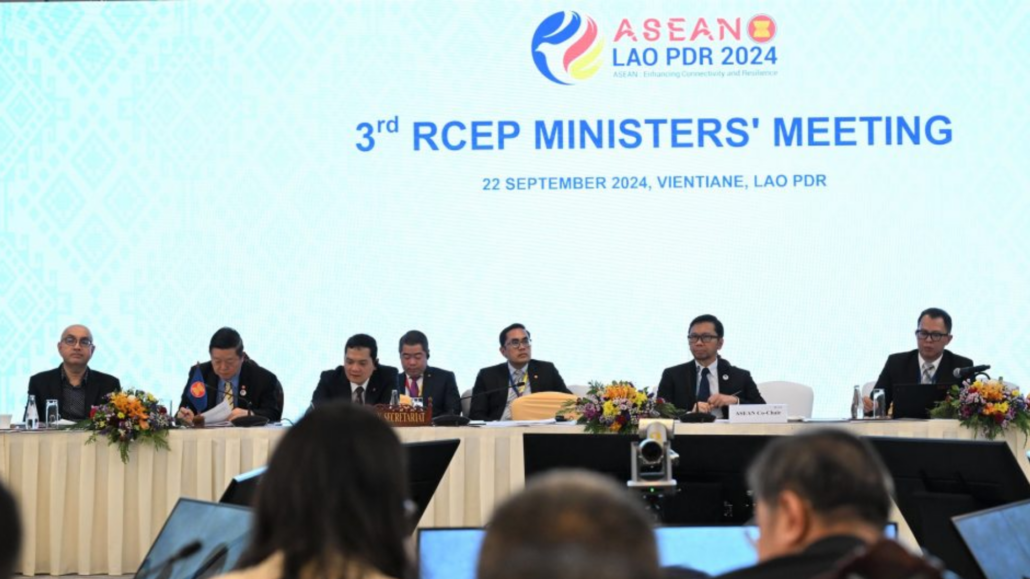
The difficulty of reaching agreements through the World Trade Organization (WTO) has led world leaders to seek alternative means of trade cooperation, such as Regional Trade Agreements (RTA). Thomas Oatley (2012) views RTA as a more promising way to negotiate and implement trade agreements. RTA is a way to enhance a country’s market access with a crucial trading partner, indicating a strong commitment to economic reform to attract foreign investors. RTA aims to bolster bargaining power as a group in multilateral trade negotiations and it is easier to establish than global trade agreements, which involve a larger number of countries with diverse interests. While operating on a regional scale, RTAs can have implications for global trade governance (Oatley, 2023). Starting in 2000, world leaders, including the Indo-Pacific region, have considered various frameworks for establishing RTA. One result of this thinking is the Regional Comprehensive Economic Partnership Agreement (RCEP). RCEP was initiated by Indonesia as the chairman of ASEAN in 2011. RCEP involving 10 ASEAN member countries (Brunei, Cambodia, Indonesia, Laos, Malaysia, Myanmar, Philippines, Singapore, Thailand, and Vietnam) and 6 non-ASEAN countries which already have a Free Trade Agreement with ASEAN (Australia, China, India, Japan, New Zealand, and South Korea) (Oba, 2016). However, India decided to withdraw from RCEP in 2019. Despite the delays and hurdles in the ratification process due to the Covid-19 pandemic, RCEP came into force for Indonesia on 2 January 2023, coinciding with the start of Indonesia’s ASEAN Chairmanship. RCEP encompassed various aspects such as trade in goods and services, investment, economic and technical cooperation, intellectual property, competition, dispute resolution, e-commerce, and support for small and medium enterprises in ASEAN member States and ASEAN trade partners (ASEAN, 2023). RCEP AND ITS VAST POTENTIAL Beyond trade, the Indo-Pacific has emerged as a concrete area for regional cooperation across various fields. Increased RTA will certainly help in reshaping policies in the region. Such advantages place the Indo-Pacific as the foremost channel for economic collaboration. It is important for Indonesia to place itself as the pivotal country to expand markets and integrate Indonesia’s economy into the Regional Value Chain and Global Value Chain through RCEP (Gultom, 2020). Especially, RCEP serves as the umbrella for ASEAN’s economic collaboration with partner countries which creates a favorable economic climate in the region. It has the potential to create spill-over effects that can enhance Indonesia’s efforts in achieving its interests (Springer, 2021). Collectively, RCEP represents a significant market. It covers 30.2% of the total world GDP and 30% of the world’s population, with 27% of global trade and 29% of world FDI. This vast potential suggests that RCEP could offer substantial opportunities for its member countries. RCEP is expected to attract more foreign direct investment to Indonesia from both local and foreign sources. Because of its vast market with great potential, Indonesia sees RCEP as a productive framework to thrive. It is more than just a trade agreement, it is a comprehensive economic cooperation pact that enhances security, regional political stability, and reinforces ASEAN’s centrality in Southeast Asia and the Indo-Pacific (Maulana, 2021). INDONESIA’S FOREIGN POLICY IN UTILIZING RCEP Various geopolitical debates surround the running of RCEP especially when Indo-Pacific Economic Framework for Prosperity (IPEF) was initiated not long after. Amid the economic tensions between the US, which is part of the IPEF, and China as a member of RCEP, both partnerships in the Indo-Pacific region are seen as a battlefield and competition arena for major powers to expand their influence. However, Indonesia emphasized that RCEP does not stand as a competitor, but rather RCEP as a balancing act (Kavanagh & Cuéllar, 2024). Therefore, the further path of RCEP must be cautious given that the US and China each have partnerships in Indo-Pacific. Indonesia and member countries need to pay close details to prevent new tensions and ensure it can serve as a mediator by establishing a free and open order based on the principles of the rule of law. RCEP is a great opportunity for Indonesia to lead the middle power in geostrategy. Beside as the initiator, Indonesia is also a key coordinator in the RCEP negotiations with unwavering commitment to prioritizing collective regional development to sustain trade, coupled with domestic reforms aimed at eliminating trade barriers, particularly within the RCEP framework (Patunru & Aprilianti, 2020). As a pivotal member of ASEAN, Indonesia also holds the potential to contribute significantly to maintaining geopolitical stability and collaboration in bridging differences and adherence to principles. Indonesia encourages the participation of ASEAN to become a bridge between large and small countries in discussing the emerging Indo-Pacific strategic concept. Indonesia wants RCEP to reflect the value of its initiator, which allows members to have their opinion and enter the partnership formally on their terms. Not to forget that RCEP is an ASEAN-driven initiative and with barriers being lifted, ASEAN member states have the opportunity to diversify their trading partners, thereby bridging any country (Sandrina & Prastyono, 2024). Being a member of RCEP is a step towards implementing Indonesia’s foreign policy in promoting regional stability and advancing shared interests over time. Compared to others, Indonesia’s policy in the Indo-Pacific region is more inclusive, less overtly geopolitical, and places a stronger emphasis on collaboration. Indonesia’s commitment and participation in RCEP is by promoting free and active foreign policy with an orientation towards national interests and world peace. This foreign policy is not transactional, rather it is rooted in principles and long-term strategic objectives. Through this foreign policy, Indonesia wants to include all actors without isolating any particular player and maintaining the principle of neutrality by fostering peaceful economic relations with both the US and China (Agastia, 2020). In particular to free and active foreign policy, Indonesia will show neutrality by not favoring any particular actor and will cooperate with every country. And as a developing country, Indonesia will have the potential to bridge other developing countries with major powers. There is no reference to how the RCEP should proceed or develop, especially its unprecedented size and member composition.